
Introduction: Earth, Faith, and Living Culture
In India, culture is deeply rooted in everyday life, rituals, and beliefs. Among the most powerful expressions of this connection are clay idols, which represent devotion, art, and philosophy together. From ancient times to modern homes, clay idols have symbolized a bond between humans and nature. Unlike mass-produced figures, clay idols are shaped by hand, carrying the emotions, skills, and faith of the artisan.
The tradition of making clay idols reflects India’s understanding of life as a cycle. What comes from the earth must return to it. This belief is why clay idols hold a sacred place in festivals and worship. Through generations, families have welcomed clay idols into their homes, celebrated with them, and respectfully immersed them back into nature.
Today, as people move toward conscious living, clay idols are once again being recognized for their cultural and environmental value. They are not just religious objects; they are storytellers of heritage, sustainability, and human creativity.
The Sacred Meaning of Clay in Indian Traditions
Long before sustainability became a modern concept, Indian traditions understood the importance of living in harmony with nature. Clay, derived from the earth (Prithvi), holds a sacred place in Indian philosophy. According to ancient beliefs, the human body itself is made from five elements (Panch Tatva)—earth, water, fire, air, and space. Clay represents the element of earth, symbolizing stability, creation, and life.
Using clay for idols reinforces the belief that:
- Everything that is born must return to nature
- Life is temporary, but values are eternal
- Humans are caretakers, not owners, of the earth
When clay idols dissolve during immersion rituals, it is not destruction—it is completion of a natural cycle. This philosophy makes clay idols spiritually meaningful and environmentally respectful.
The Origins of Clay Idol Making in India
The history of clay craftsmanship in India dates back thousands of years. Archaeological findings from the Indus Valley Civilization show terracotta figurines used for rituals, storytelling, and decoration. These early creations were not just toys or ornaments—they reflected social beliefs, fertility worship, and everyday life.
Over centuries, clay evolved into a sacred medium for religious expression. Temple traditions, folk rituals, and seasonal festivals encouraged the growth of localized styles of idol making. Each region developed its own techniques, proportions, and symbolism—turning clay idols into cultural signatures of communities.
Stories Behind Popular Clay Idols
Lord Ganesh: The God of Beginnings
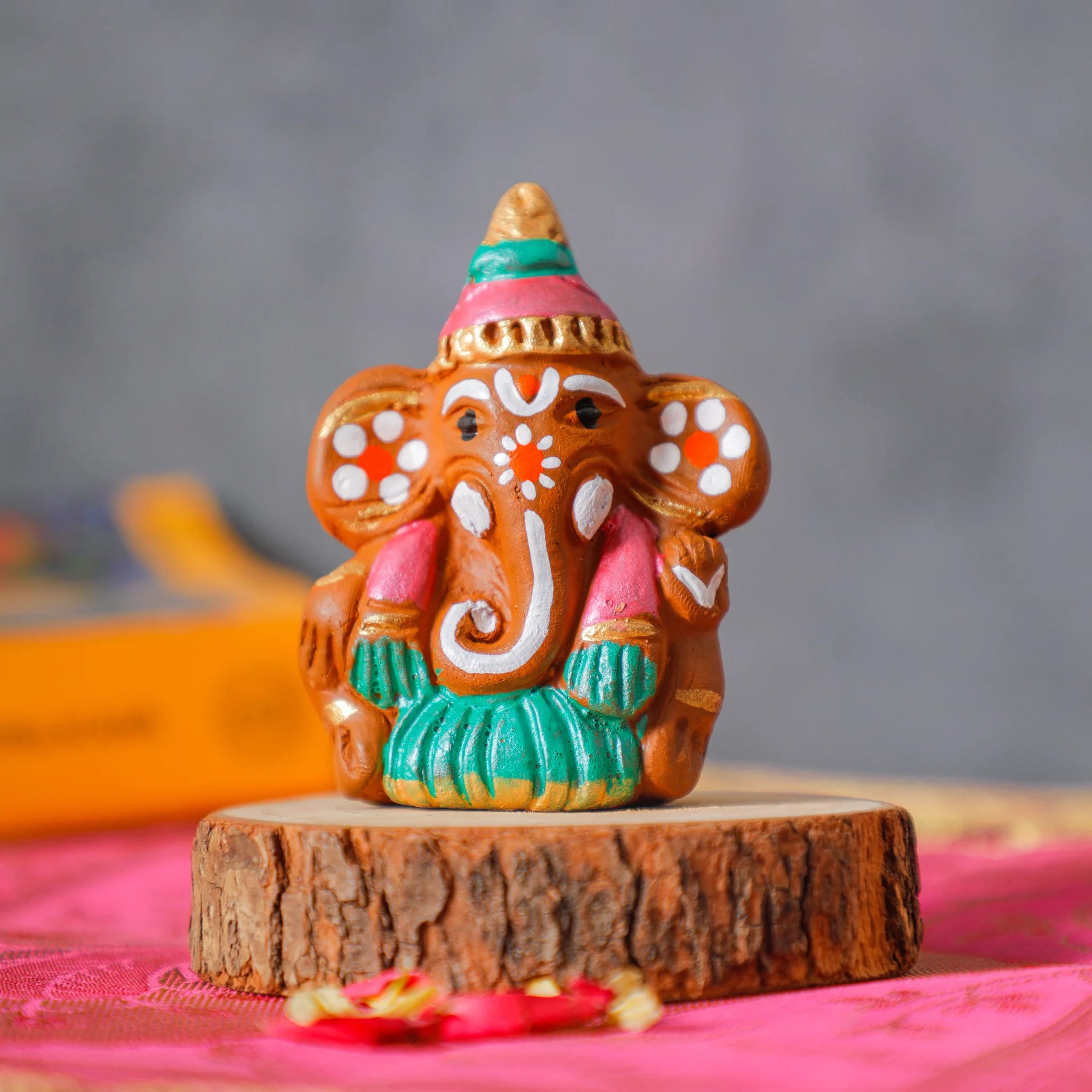
Lord Ganesha is one of the most widely worshipped deities in India, and clay has always been his preferred form. Traditionally, Ganesha idols were small, simple, and made at home using natural clay. The round belly symbolizes abundance, while the elephant head represents wisdom and foresight.
The use of clay reflects Ganesha’s closeness to common people. He is not distant or grand alone—he is personal, approachable, and humble. The story of his immersion after Ganesh Chaturthi teaches devotees to let go, accept change, and respect nature.
Goddess Durga: Strength and Protection
Durga idols are powerful visual narratives. Crafted especially for Durga Puja and Navratri, these idols depict the goddess slaying Mahishasura, symbolizing the victory of good over evil. Traditionally made from clay mixed with sacred soil, Durga idols carry deep spiritual meaning.
In Bengal, the idol-making process itself is a ritual. Artisans treat the idol not as an object, but as a living presence. The expressive eyes—painted in the final stage—are believed to give life to the idol, a moment known as Chokkhu Daan.
Lord Krishna: Divine Playfulness
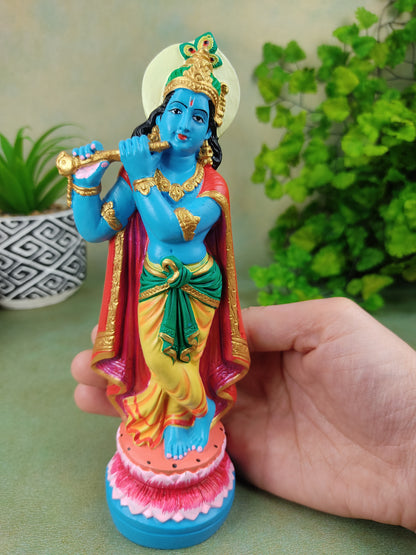
Clay idols of Krishna often capture moments of childhood—stealing butter, playing the flute, or dancing joyfully. These forms reflect the philosophy of Leela (divine play), teaching that spirituality can coexist with joy, music, and love.
In villages, Krishna idols made from clay are often small and simple, reminding devotees that divinity exists in everyday life—not just in grandeur.
The Artisan’s World: Hands That Carry Heritage
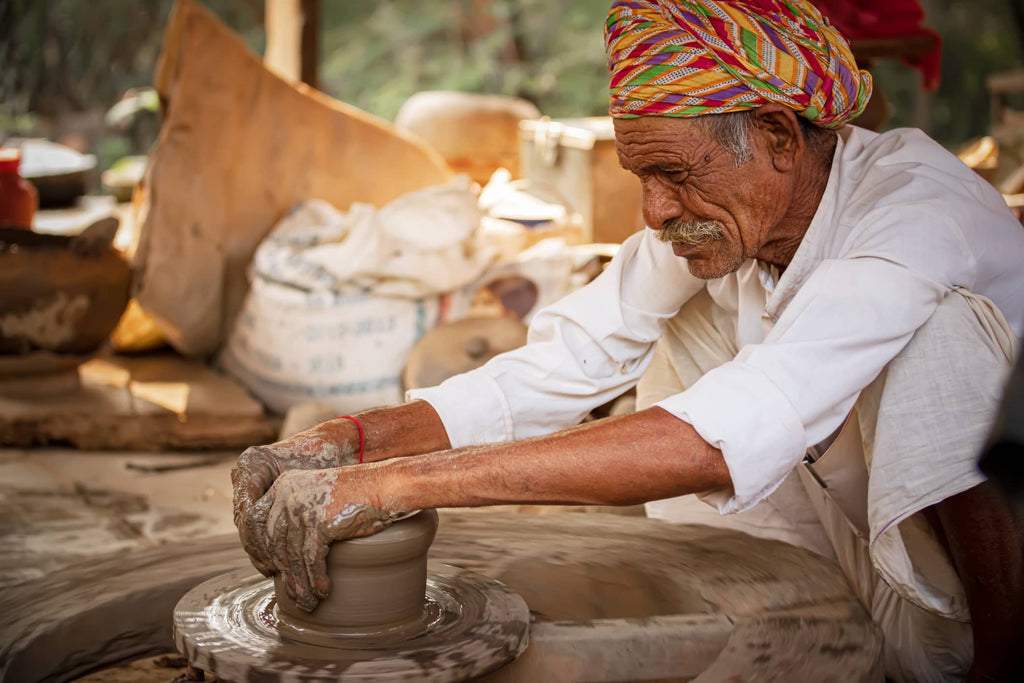
Behind every clay idol is an artisan whose skills have been refined over generations. Most clay idol makers learn their craft not from books, but from observation—watching parents and grandparents work, feeling the clay, understanding its behavior.
The Process
- Clay collection and preparation
- Hand-molding or wheel shaping
- Drying under natural conditions
- Detailing facial expressions and ornaments
- Natural firing or sun drying
- Painting with eco-safe colors
Each step requires patience, intuition, and experience. A single mistake can crack the idol, yet artisans accept this uncertainty as part of working with nature.
Regional Traditions of Clay Crafts
4
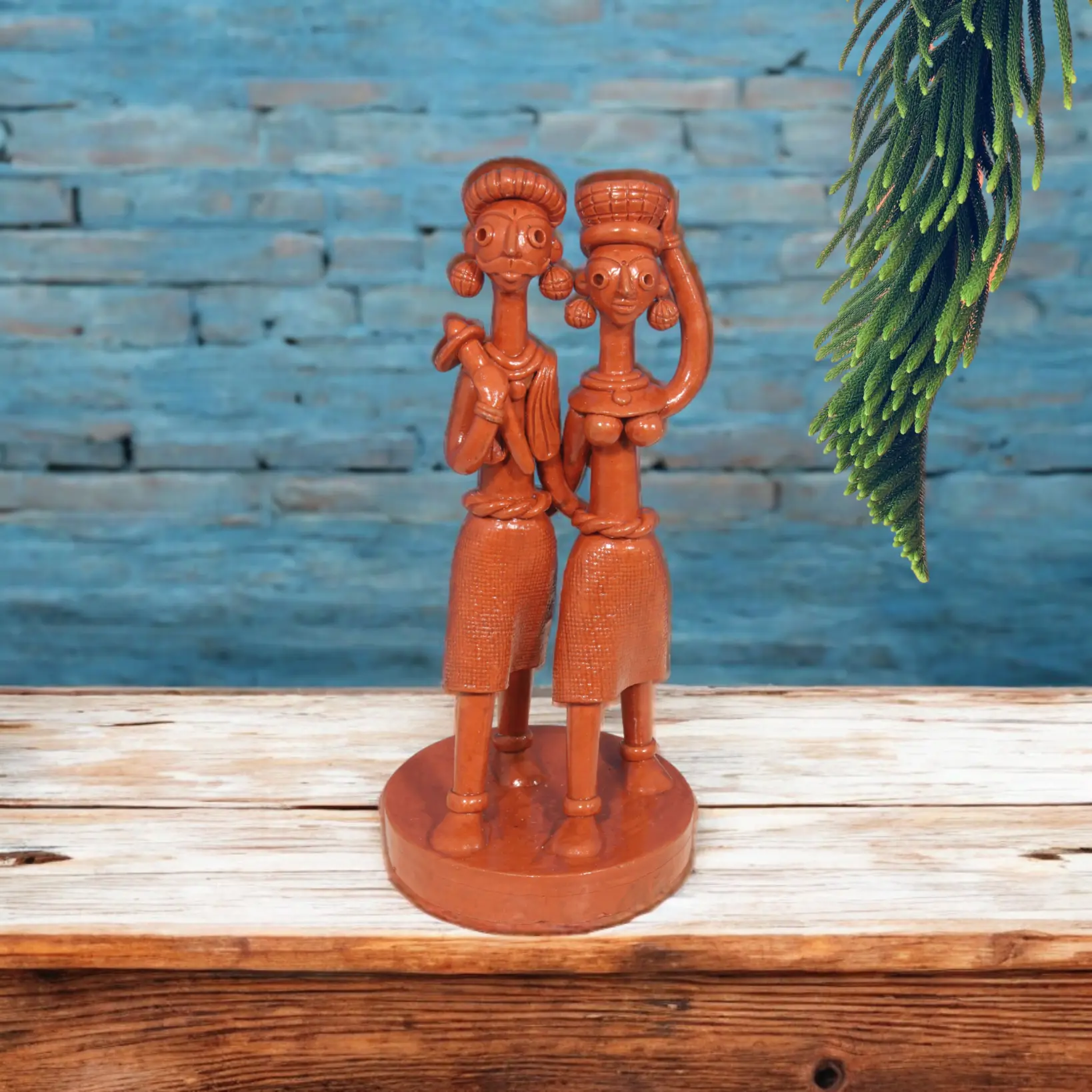
Different regions of India express their identity through clay idols. In Bengal, clay idols are detailed and expressive. In Rajasthan, clay idols reflect folk art and rural life. Southern India celebrates clay idols through Golu displays, while central India prefers minimal and earthy designs.
These regional styles ensure that clay idols remain diverse and culturally rich.
Clay Beyond Worship

The tradition of clay idols is closely connected to other clay crafts. Diyas, pots, and decor items often accompany clay idols during festivals. These objects create a complete cultural environment where art, faith, and daily life merge.
Rituals, Festivals, and Community Bonding
Clay idols play a central role in Indian festivals. These occasions are not just religious—they are social and cultural events that bring communities together. Families clean homes, artisans prepare months in advance, and markets come alive with colors and creativity.
Festivals like Ganesh Chaturthi and Durga Puja create a shared rhythm of preparation, celebration, and farewell. The immersion of clay idols symbolizes detachment, gratitude, and renewal.
Clay Idols and Environmental Consciousness
In recent years, awareness about environmental damage caused by chemical paints and plaster idols has grown. Clay idols have re-emerged as symbols of responsible devotion.
Eco-friendly clay idols:
- Dissolve naturally without harming water bodies
- Support local artisans
- Preserve traditional knowledge
- Reduce carbon footprint
Choosing clay is not just a religious choice—it is an ethical one.
Challenges Faced by Clay Artisans
Despite cultural importance, clay artisans face many challenges:
- Competition from cheap, machine-made idols
- Seasonal income and financial instability
- Declining interest among younger generations
Supporting handmade clay crafts is essential to keep this heritage alive. Every purchase is a vote for tradition, sustainability, and human skill.
Clay Idols in the Modern Home
Today, clay idols are finding space in modern homes—not just as religious items, but as cultural statements. Minimalist decor, conscious living, and a return to roots have increased appreciation for handmade clay products.
People now value:
- Imperfections that tell human stories
- Natural textures over artificial shine
- Meaning over mass production
Clay fits perfectly into this shift.
Conclusion: A Story Molded in Earth
Clay idols are more than sacred figures—they are living narratives of culture, faith, and sustainability. From the hands of artisans to the hearts of devotees, they carry stories that transcend time.
In choosing clay, we choose:
- Respect for nature
- Honor for artisans
- Continuation of tradition
In a world driven by speed and convenience, clay reminds us to slow down, stay grounded, and remember where we come from.
Because every clay idol is not just made—it is born from the earth, shaped by devotion, and returned with gratitude.
For more stories rooted in earth, tradition, and handmade beauty, follow Malwa Ecocrafts on Instagram.
- Read more about how tradition, clay, and culture come together at Malwa Ecocrafts